A Reader’s Checklist for the First Page of a Policy Proposal
Use this first-page policy proposal checklist to identify the problem, intended audience and proposed action, then decide which gaps deserve attention next.
A first-page policy proposal checklist helps you tell what a rural policy intends to change before its polished language carries you along. Read the opening page once for its main claim; then use a short set of checks to identify the problem, the people affected and the action proposed.
What should you check first?
- Problem: Underline the sentence that names what is wrong, missing or difficult. If it offers only an aspiration such as “stronger communities need investment”, then note that the proposal has not yet identified what is failing.
- Place and audience: Look for a named area and group, such as remote settlements or small farms. If the proposal says only “rural communities”, then mark the scope as unclear; if it identifies a service area or type of household, then record that boundary.
- Cause: Check whether the page establishes a reason for the problem, suggests one or skips straight to an action. If it presents distance or staffing as the cause without explaining the basis, then flag that claim for later scrutiny.
- Beneficiary: Identify who is meant to benefit, not just which organisation receives funding. If a council or clinic is named but residents are not, then note that the proposal needs to explain how the organisation’s work reaches them.
- Action: Circle the action verb—fund, require, provide, coordinate or change—and its object. If the page says only “improve local transport”, then record that as a goal rather than a defined action; if it proposes a demand-responsive bus service, then note what further delivery details remain open.
- Responsible body: Find the named decision-maker and delivery organisation. If neither appears, then write down that responsibility is unclear; if both are named, then check whether their roles are distinct.
- Reach: Compare the scale of the problem with the reach of the proposed action. If a regional problem is met with a service for one locality, then check whether that service is a trial, a priority or the full response.
- Unanswered question: Choose the omission most likely to change your reading. If eligibility, coverage or a measure of improvement is missing and affects the central promise, then carry that question forward; if it concerns a minor delivery detail, then leave it for later.
How can you tell a clear proposal from a vague one?
Clarity is not the same as certainty. An opening can name its intended audience and action while acknowledging that local needs differ or that delivery details remain undecided. By contrast, a promise to “support rural vitality” does not reveal which problem takes priority or what a public body intends to do.
Say a fictional proposal describes residents in outlying villages struggling to reach routine appointments and proposes a bookable minibus coordinated by the county transport team. First, mark the problem, audience, action and responsible body; next, note that the included villages and booking method are unspecified. The resulting reading is clear but qualified: the proposal has a recognisable direction, yet its reach and access arrangements need explanation before its promise can be judged.
What questions should the first page answer?
Does the opening need to include supporting evidence?
It should give enough context to make the problem understandable, though detailed evidence may appear later. If a claim defines the affected area or names a particular cause, mark it for support as you read on.
Should every affected group be named?
Not necessarily, but the intended audience should be clear enough to distinguish people expected to benefit from organisations expected to deliver. If a broad label leaves that distinction uncertain, check whether a later section explains who is included and who may be missed.
What if the action is described only as a goal?
Record the gap between the desired change and the means proposed to reach it. If the next section names an action, actor or pending decision, follow that thread; if it does not, the proposal’s practical direction remains unclear.
Is it worth querying every missing detail?
No. Focus on omissions that could change your understanding of the problem, audience or action. Fine-grained delivery arrangements can wait unless the opening relies on them to make its central promise convincing.
How should you use your notes on the next page?
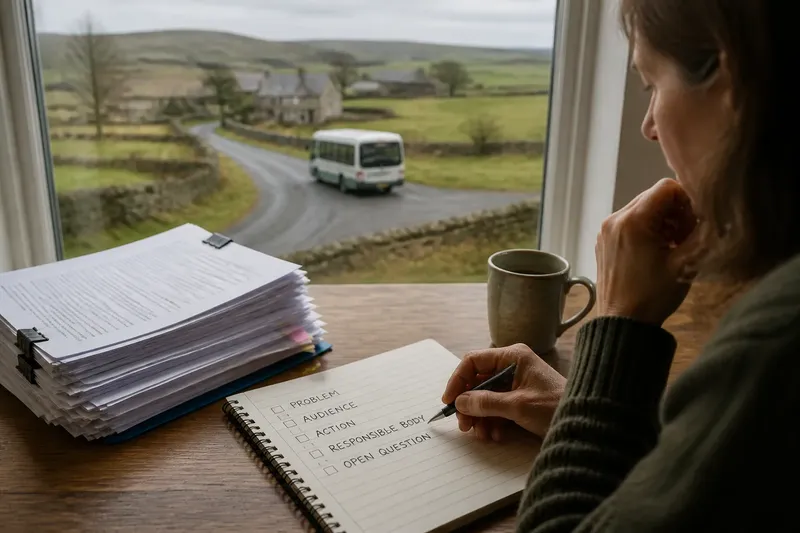
Keep four short labels in the margin: problem, audience, action and open question. Add one relevant phrase beside each, then carry forward only questions that could change who benefits, who is responsible or what a decision-maker is being asked to approve.
It is not worth marking every appealing phrase or challenging each word choice before you know the proposal’s scope. A first-page policy proposal checklist is a filter, not a verdict; use it to find the one precise question the rest of the document must answer for its proposed action to make sense.